
Transcript: Episode 240: Strange Bedfellows 🐒
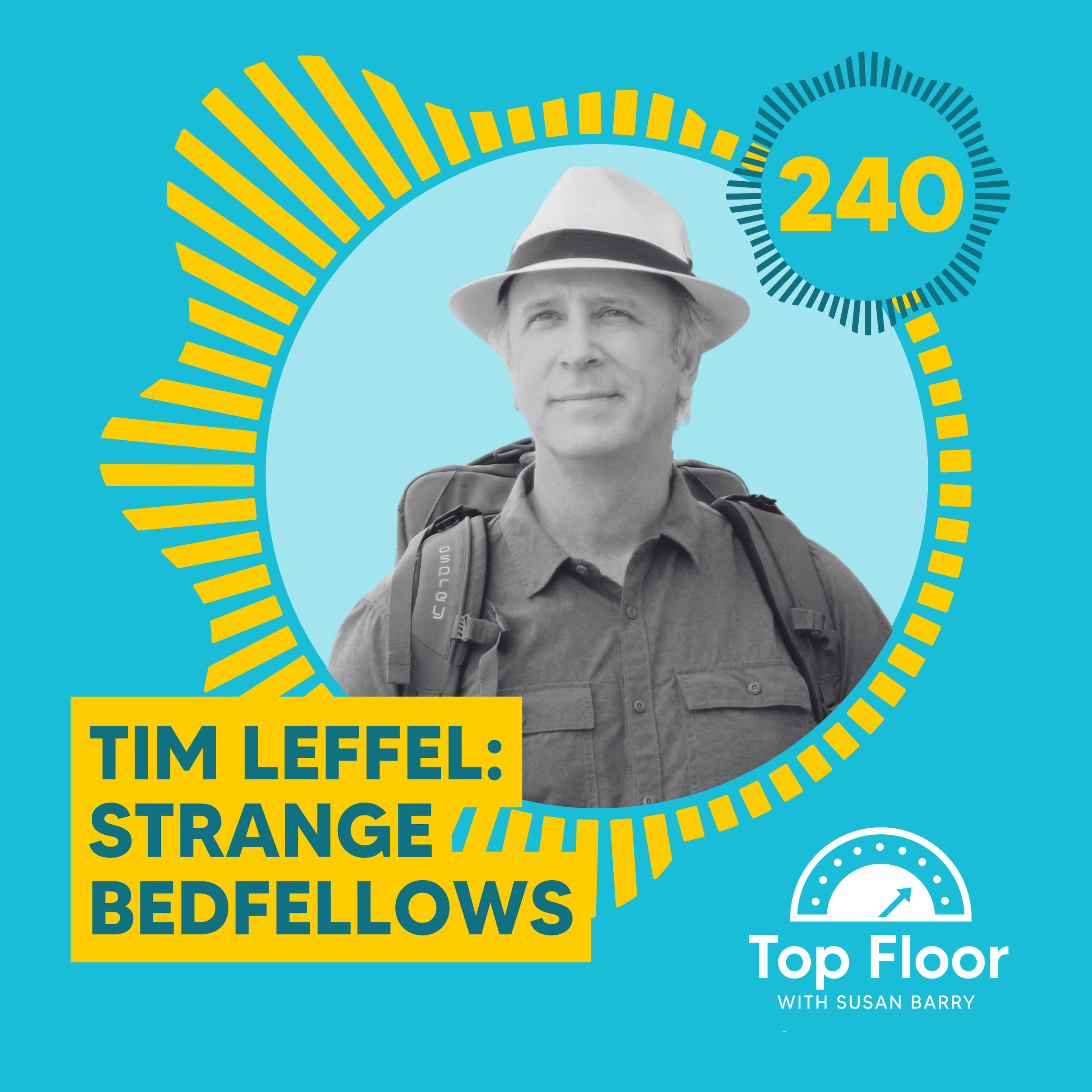
LISTEN TO THE EPISODE:
APPLE PODCASTS | SPOTIFY | TOPFLOOR.COM
[00:00:00] Susan Barry: This is Top Floor with Susan Barry, episode 240. You can find the show notes at topfloorpodcast.com/episode/240.
[00:00:15] Narrator: Welcome to Top Floor with Susan Barry. This weekly podcast ride up to the top floor features tangible tips and excellent stories from the experts and characters who elevate hospitality. And now your host and elevator operator, Susan Barry.
[00:00:32] Susan Barry: Welcome to the show. Tim Leffell is a veteran travel writer, editor and digital nomad who has spent decades exploring the world and reviewing hotels from a consumer perspective. After starting his career as a music industry marketing director, Tim made the life-changing decision to leave it all behind and travel the world with his wife. Since then, he has reviewed more than 1500 hotels across dozens of countries, contributed to major travel publications and founded multiple platforms, including Luxury Latin America and Hotel Scoop. Today, he writes the popular Nomadic newsletter, which I got in my inbox this very morning, focused on remote work and location-independent living. Today, we are going to talk about digital nomad travel, what makes a great hotel experience, and the evolving landscape of hospitality from a guest's point of view. But before we jump in, we need to answer the call button.
Call button rings…
The emergency call button is our hotline for hospitality professionals who have burning questions. If you would like to submit a question, you can call or text me at (850) 404-9630. Today's question was submitted by Bill. This is such a good question and such a good question for you. Bill says there seems to be such a disconnect between perception and reality when it comes to safety in travel. I would like to travel with friends to less expensive places, but they seem to think that they are going to be murdered. What causes this fear? Any suggestions for overcoming it? You are for sure an expert on this topic, so take it away, Tim.
[00:02:33] Tim Leffel: Yeah. I live in Mexico, so you can just imagine the comments I get from my relatives. They're surprised I haven't been kidnapped and decapitated by now, I guess. There's two things that cause this. I think one is just something as old as time. We've had this fear of others and it probably served us well in the caveman days to be suspicious of people we don't know. And I still think that kind of lingers in our subconscious, even the other side of the tracks in the city, to be avoided because it's scary. But what's made it worse in modern times is the combination of 24-hour news channels and social media amplifying everything that's sensationalist. And we've got this double problem now, where no matter what kind of media you look at. You're seeing the worst of everything. So I think the USA is not a safe place by any objective standards. But if it's the devil, then it seems better than the devil you don't know. But in general, almost anywhere you go on the planet is gonna have safety issues, but probably lesser ones than you're facing in your own hometown in terms of gun violence, especially. So, keep that in mind. Most countries are safer than the United States, first of all, especially developed countries. Where the wars aren't war zones are. That's not too hard to figure out, especially right now.
[00:04:03] Susan Barry: Yeah, like maybe don't go to a battlefield necessarily.
[00:04:08] Tim Leffel: Yeah, that’s probably not a good idea.
[00:04:08] Susan Barry: Mexico is gonna be fine.
[00:04:11] Tim Leffel: And there are shades of gray here, like Mexico, it's mostly cartel against cartel. It's the same kind of thing you would have with gang violence in Los Angeles or whatever. They're not going after innocent bystanders, they're going after people they have a beef against. And so unless you're really in the wrong place at the wrong time, you're not gonna be impacted. So it is more important to look at how many tourists are affected. If you hear about tourists getting killed, then okay, you have a cause to worry. But really, that makes the news because it's so rare. It's rare that a tourist gets killed anywhere. So, usually these fears are overdone, over founded, whatever.
[00:04:52] Susan Barry: I could not agree more. I just always have to think about the times that I've gotten, like phone calls and text messages from people who live across the country from me because they hear of something happening in Atlanta. Well, Atlanta's like the eighth-largest MSA in the country, so it didn't happen on my street, y'all. Everybody settled down. Well, I think I have the unique position of having a career that has one touched two of the most glamorous-sounding industries in the history of time. So you were in the music business and now you are a full-time traveler. Essentially, what was the churning point in your music industry career that made you go enough of that glamor time to turn my attention to another glamorous endeavor?
[00:05:48] Tim Leffel: Well, as you know, for being in hospitality, a lot of times things look more glamorous on the outside than in the day-to-day. The music business is selling widgets, too. It's just a more glamorous-looking widget, but they make money by people spending money. Anyway, I did that for seven years in Nashville and New York City, and it was very exciting. And I was young and childless and unattached. So I got to really enjoy all the perks of it. But as time went on, I was getting more and more frustrated with clashing with my boss and things like that. And my girlfriend at the time, who is now my wife, said I'm tired of this job. I'm in. I'm ready to go. I wanted to go traveling and I haven't been able to at all since taking this job, so I'm gonna go grab my passport and go traveling around the world and I'd like you to go with me, but if you don't, I'm going anyway. So it was kind of an ultimatum. And then soon after that, I got fired from my job after one too many fights with my boss and she got laid off from hers, or her company went out of business. Actually, she was in the music business also. So we took off after that.
[00:07:02] Susan Barry: She spoke that into being, like, she made sure that the universe conspired to get y'all on the road.
[00:07:06] Tim Leffel: She manifested it. So after I wrapped up a lot of things at home, I had a car and a condo and that kind of stuff, but we circled the globe for 12 months and got back in. Our parents were like, " Wow, what an adventure of a lifetime. What are you gonna do now?” And we were like, we're gonna save up money and go again. So, we ended up doing that three times. Like, but one time along the way, we taught English for a year, and along the way, I was trying to figure out what I could do to make money. And so I started travel writing because I had done a lot of writing in my old job, marketing kind of copy. And then I started getting some jobs, doing gigs for magazines, getting articles accepted, and then I hooked up with this trade publication where I was reviewing hotels. And the first place I did it was Turkey and I ended up doing it in Egypt, Jordan, Israel, Korea, Guam, like India, Nepal, all these crazy places over time. And so I got really good at figuring out the essence of a hotel. Sometimes, just on a tour, sometimes I would stay there, but sometimes I would just do the tour with the PR manager and had to write up a detailed review from that.
[00:08:22] Susan Barry: Listen, at this point in my career, I can probably do the same. Like you walk in the lobby, I can tell you whether the hotel has a union or not, and many other things that are related to the thing. So, after reviewing more than a thousand hotels, do you think your tastes or your expectations have changed, like something that used to be important to you isn't anymore, or vice versa?
[00:08:48] Tim Leffel: Well, I've gotten older, so in general, you look for more comfort. You get older. We stayed in some pretty lousy guest houses when we were on a cheap backpacker budget. So, I guess that's the main thing. I'm not trying so hard to save 15 or 20 bucks like I used to. I might say, “Oh, these 20 bucks are definitely gonna be worth it to stay at hotel B instead of hotel A.” And I don't know, I care more about things working properly, I guess. I don't put up with as much as I used to. I want a good desk chair and that's hard to find a lot of times. I would like a good desk where it's easy to find the outlets, simple things like that. So those things are more important than they used to be.
[00:09:34] Susan Barry: Do you think of yourself as an insider part of the hospitality industry, or do you still have that outsider journalistic remove and think of yourself as more an observer from the outside?
[00:09:52] Tim Leffel: Well, it's kind of funny. I'm still an observer, I guess, but I feel like I have more insight on the way things actually work and a lot of younger hotel people do, just 'cause I've been around a long time and I've talked to a lot of GMs, but also I'm part of the industry 'cause I send a lot of business to these hotels as a publisher via affiliate links. That's just a setup where if you send a customer, you get a small commission from it. And we send 20 or $30,000 worth of bookings every month to various hotels. So from that sense, I am in the industry, I guess, and I know what works and what doesn't work by now for sure. But yeah, it's funny, I still talk to managers or marketing people sometimes that kind of act like these bookings just show up by magic and they come outta nowhere. And you know, they're just Expedia sending me lots of bookings this month. And it's rarely that simple. Expedia does studies where they say, like, people visit 45 websites before they actually book a hotel. And even on Expedia, they're poking around for a while before they decide which one they're gonna click the button on. So I'm involved in that sense from a business standpoint, but I also try to understand the inner workings of why things are the way they are. But in the end, I'm a travel writer, so I guess I'm an observer.
[00:11:15] Susan Barry: Do you think you're an influencer?
[00:11:17] Tim Leffel: I really don't love that word, which I'm sure you hear a lot. It's kind of just become work in meaning. I think it’s kind of now seen as like people who are on TikTok and Instagram. And I don't think a lot of times they really have much influence, whereas a big magazine that sends loads of bookings to somebody, they don't call themselves an influencer or the New York Times or whatever, but they certainly do influence bookings. So, I mean, I have influence, but I don't really like that term. I just call myself a publisher or a content creator or a travel writer.
[00:11:52] Susan Barry: Interesting. So one of the things that I like about Nomadic O, and one of the reasons I think why I first subscribed, is that I am so enticed by becoming a digital nomad. Probably part-time, but spending like a month here, a month there, I can work from anywhere, so can my husband. So it just feels like something that I should definitely be doing. How would you define what it means to be a digital nomad? I mean, you're probably the OG. You've been doing this for a really long time before in the pandemic, people picked it as a hashtag lifestyle or whatever. So what do you think it is? How has it changed? Just spill your guts.
[00:12:38] Tim Leffel: I mean, there are these little differentiations on the semantics. I guess I would call an expatriate someone who's put down roots and like has residency and whatever. Whereas a digital nomad is someone who's roaming around the world and like spending three months here, three months there. But in both cases, the person can work remotely from anywhere if they're still working. So in that sense, there's not a huge difference. But someone who can work from anywhere, work from their laptop and not have to be in a specific location. And I guess if you're a nomad by nature, you're not staying in one place.
[00:13:17] Susan Barry: Touche. Has it changed since you've been doing it?
[00:13:22] Tim Leffel: Oh, massively. First of all, just because of what you said about being able to work from your laptop, that used to be a really bizarre thing when I told people I had a laptop job and then I could work from anywhere. They would look at me like I had two heads, you know?
[00:13:36] Susan Barry: Like, you're a criminal.
[00:13:37] Tim Leffel: Like, you make money from that, you know? Is this legit, you know? And I'm like, yes, this is a real job. I make money. I don't have to be at home. Don't have to go to an office. But also, the technology's gotten so much better. Like you used to see on message boards, people asking about whether the internet was any good in a specific city, not just a hotel. Like the whole city isn't any good. And now, you can get fast internet pretty much anywhere and it's not a problem. And it's so easy to talk to people like we are now with Zoom or Google Meet or whatever, it's easy to have a voice-over IP phone call. So you could still be a sales rep and be living in another country and still be making all your phone calls. And that was not true until Skype came along. And even then, that was a little clunky. So yeah, I mean it's a lot easier and that can be a double-edged sword too. People are glued to their phones way too much and they're not socializing like they did when I first started out, but you know, whatever. You always get together with the pad.
[00:14:38] Susan Barry: What do you mean? You think it's 'cause they're like, I'm supposed to be working, so let me be working all the time.
[00:14:46] Tim Leffel: No, I just think everybody's glued to their phone. Yeah. Like you see it at an airport or a bus station or whatever, when you look around, whereas. When I first started traveling, it was before the internet, which is hard to believe. There was such a time, but people would gather in the social areas of hotels and guest houses and like just talk and like give each other recommendations. And we'd be scribbling in each other's guidebooks. Like, you gotta stay at this place, or go to this place. And there were physical message boards on the bulletin boards at each of the hostels and guest houses where backpackers went. And so it's just very different. I go to those kinds of places now, and there aren’t many people talking to each other. They're all like messing around on their phone.
[00:15:25] Susan Barry: Do you think maybe they're just texting each other?
[00:15:28] Tim Leffel: It could be, yeah.
[00:15:29] Susan Barry: Side by side.
[00:15:30] Tim Leffel: I've seen people my daughter's age doing that. They're sitting right next to each other, texting each other.
[00:15:34] Susan Barry: Mm-hmm. That's my Instagram activity is about 99% sending stuff to my husband and my two best friends that I talk to all day, every day anyway. I'm curious, I'm not exactly sure how to phrase this question because I don't want to ask a real hacky question, but there's like every three months or something, there will be a huge article about over tourism and, oh, all these Americans are running, or people from other countries are running us out of house and home. Everything is now on a short-term rental instead of a residence, blah, blah, blah, blah, blah. I guess maybe what I wanna understand from you on the ground, like as you've been traveling, is how true that stuff is, how impactful it is, or is it another one, like the safety thing that's perception versus reality.
[00:16:33] Tim Leffel: I'd say this one has more reality, but for specific neighborhoods in a specific city. Let's just use two examples, Lisbon and Mexico City, 'cause those are the ones that are thrown out a lot. I was just in Mexico City and yes, there are a lot of foreigners walking around in Condesa and Roma, which are the two most favored neighborhoods, but go anywhere outside that, and you'll barely see a foreign face. It's a very isolated problem. And it's the same in Lisbon. Yeah. The historic center is where people have gotten displaced and there are a lot of short-term rentals that they're trying to deal with in Barcelona, like that. But I feel like it's such an isolated problem and it's just people tend to focus on these problem areas and ignore all the ones in the rest of the country that are like, please send us more tourists, right? Please send us digital nomads. We will pay you to come here. Because it's not evenly distributed, and that's something that governments can deal with in many ways. You see governments in Spain and Italy dealing with that, where they're actually offering incentives for people to come live somewhere and stay for a year. Or they're offering incentives, like they're selling houses for a dollar that people just have to fix up after that. That's part of the deal.
[00:17:48] Susan Barry: Please email me a house for a dollar.
[00:17:50] Tim Leffel: Or one euro. Sorry.
[00:17:52] Susan Barry: I'll take it. Sold already. I don't need to see it.
[00:17:55] Tim Leffel: Yeah, there's a bunch of 'em. Like you just have to commit to fixing them up, 'cause there's a lot of villages all over Europe that are empty because all the young people left to go work somewhere else. They don't wanna hang around Grandma's town. But we go there and go, oh my God, this is the most beautiful place on earth. And so we're willing to go there and fix up a house and live.
[00:18:15] Susan Barry: Well, why don't you have a fleet of one Euro homes across Europe then? Let's get on this.
[00:18:23] Tim Leffel: I know I should put a database together or something. Anyway, I'm in a city in Mexico, Guanajuato, it's probably 250,000 people. There's maybe 600 gringos here, maybe 800 in the middle of snowbird season. Like we're not making a dent, you know? Like, we're not driving anybody out of their homes. And there's Airbnb, 'cause of course, landlords are gonna maximize their return. And so they're gonna make more from short-term rentals, they're gonna go with that. But I've also seen a lot of cases where landlords did that, it didn't go so well, and then they went back to renting to people long term because they want less hassle and more stability and somebody that's gonna take care of the place. And so, I don't know, a lot of these problems can be corrected by good government policy or just the tax framework or something like that to give people an incentive to rent out long-term instead of short-term. But somebody has to grapple with it and come up with a solution that people can agree on.
[00:19:26] Susan Barry: Meanwhile, I'll take a one Euro house. Thank you. We like to make sure that our listeners come away from every single episode of Top Floor with a couple of really specific and practical tips to try either in their businesses and their personal lives and their travels. What are your tips for finding great accommodations at a good value, since you're not getting anyone to talk to you at the hostel anymore?
[00:19:58] Tim Leffel: I know. Yeah. Now you don't have to rely on word of mouth, which is a good thing. First of all, this has gotten tons easier, too, in every way. These aggregator sites are really useful. So start there. Travago or hotels combined, or kayak or Skyscanner, whichever one you like, but they will give you prices from multiple booking sites at once. And first of all, make sure you are getting the best price when you do book, but also just get a general range of what things are going for. And you know, if you want a three-star hotel with a pool, you can filter that and figure out what's available. So start there, but don't let it in there. I strongly encourage people to read the reviews these days, especially on sites like booking.com and Expedia, where only the guests who have stayed there can leave a review, like TripAdvisor. It can be gamed and people can get in there and talk crap about their competitors and things like that.
[00:20:57] Susan Barry: But yeah, I mean, it can be gamed from every angle, too.
[00:21:00] Tim Leffel: Yeah. At least with those booking sites, somebody has to have stayed there and paid for it. So read between the lines, like if four or five people casually mentioned that the internet wasn't very good, well, probably it's not gonna be very good. And so keep those things in mind. But they also have those rating systems. You get an 8.5 or 9.1 or 9.6 or whatever. I mean, if only two people have reviewed it, that doesn't mean much. But if 2000 has, then it's pretty useful. But I would say just invest some time. Like, I think a lot of times people don't shop around enough and they don't spend the time they need to find the perfect place at the perfect price. And one thing I've even done is gone on Google Maps when I haven't found what I'm looking for because a lot of independent hotels, especially in Europe, aren't on any of those OTAs to start with. Like you won't find them on Booking or Expedia 'cause they don't want to pay the 25% commission. So I found a lot of good places like that in Greece and Italy and other countries, because I don't know what the percentages are, but there's definitely a much smaller percent of the properties that are on those OTAs. You're mostly just getting the chain hotels, so just look around. We've got lots of sources at our fingertips, you don't have to leave your chair.
[00:22:19] Susan Barry: How do you think that hotels can better appeal to longer stay or like remote working travelers or should they not, as are those just folks who are gonna stay at short-term rentals?
[00:22:32] Tim Leffel: Yeah, I've seen some hotels trying to get more of that business, but I haven't seen any of 'em really do it. Like, there are certain things you get with an Airbnb or even a co-living space that are hard to duplicate in a hotel. You have an apartment that usually has good natural light and a well-equipped kitchen and a decent desk chair, and things like that. And it's in a different kind of neighborhood than hotels are usually in, especially those long stay hotels, what extended stay or whatever you would call them in the USA, they're mostly on a highway, they're not really in a place where you wanna spend a long time unless you're there for work, which is who they're geared to.
[00:23:12] Susan Barry: Right. And they're also a way to let municipalities off the hook for housing, as another soapbox for another day, but carry on.
[00:23:21] Tim Leffel: Yeah. But I think somebody will come along that does it right. And they will have true apartment feeling properties that are a good price, 'cause that's another thing. If you're gonna charge $250 a night, somebody's just gonna go rent an apartment 'cause it's a better deal. So it's hard for them to completely compete head-to-head with VRBO or Airbnb or whatever, or all the local agencies that are geared to digital nomads. There are ones I've rented from in different cities that are only in that city and they are totally locked into the short-term rental period, but they're renting places for like a month or two to nomads. And so that's a whole different market that hotels have a hard time meeting.
[00:24:06] Susan Barry: I almost wonder if it's like, stop trying. There's a conversation happening in hotels about multi-generational travel and how short-term rentals are better suited to accommodate that travel because they're living rooms and kitchens and stuff like that. Maybe that's the next big thing in hotel design, that you would try to build a more flexible box. Like why? Just stop. That's not what you're for. Yeah, maybe, I mean, maybe I'm wrong. It just drives me crazy when, and I think it's getting worse and worse and worse. Hotels are trying to be all things to all people all the time. Like, pick a lane, dude.
[00:24:48] Tim Leffel: Yeah. And they just keep adding more brands instead of trying to differentiate the ones they have. And the other thing you sort of touched on is the space factor. If you're a family of four, hotel rooms are just not set up very well for you unless you're gonna spend a fortune on the best suite or you're gonna rent one of the villas or whatever, but you know, you can get a pretty reasonably priced Airbnb or VRBO that's gonna fit everybody. And people get their own bedrooms and whatever. So I think it is hard for hotel developers to duplicate that because they're trying to maximize their square footage.
[00:25:26] Susan Barry: Exactly. What do you think are some of the small details that hotels overlook that make a big difference to guests? Like maybe an outsized difference to guests? I know you're gonna say office chairs. I can already tell.
[00:25:40] Tim Leffel: No, I'm gonna skip that one, but I'm gonna talk about some equally mundane things that I think they ignore. Like, I really wish hotel managers would go stay in a standard room in their hotel on a regular basis and just make notes of everything that's bugging them because guarantee you those things are bugging the guests even more, like think about the blinking alarm clock that housekeeping hasn't bothered to like turn off or reset or whatever. Those stupid bottles in the shower where the brand name's this big, and then way down, a microscopic type that says conditioner or soap. Like, who's gonna take their glasses into the shower? And the lighting, like some of these boutique hotels, especially try to be so crafty and cool with their lighting and with like 12 different mood setups or whatever. But how do I just turn on the light by my bed? Like, it shouldn't be this hard. I shouldn't need a tutorial. Just like all those simple function things. And this stupid blinking smoke alarm thing, like all it's doing is showing that the power's going to the smoke alarm. But if you're lying in bed and you're looking up, it's like blinking in your eyes. It's like no matter what you've done with the blackout curtains, you've still got a blinking light in your room.
[00:26:51] Susan Barry: It's like those nightlight switches in the bathroom. Have you seen those before, where it's like the little switches just lit up? I'm only gonna tell you this, I am kind of afraid of the dark, so I appreciate a nightlight, but then it's on all the time, like right all the time. So you have to wear a sleep mask. So then why do you have a blackout? Yes.
[00:27:16] Tim Leffel: What I do love, I've been in a few hotels and I love this little thing when you put your feet down off the bed, this little dim light comes on underneath the bed so that you can find your way to the bathroom. Yes, but it's on a timer, so that like 30 seconds later it goes off. That's a really cool thing.
[00:27:34] Susan Barry: That is cool. You're right about that. All right, so stay in your hotel and get some very dumb lighting under the bed. Well, we have reached the fortune telling portion of our show, so now you have to predict the future and we will see if you got it right. What is a prediction that you have about the future of the relationship between hotels and short-term rentals?
[00:28:00] Tim Leffel: Yeah, like I said, I think somebody's gonna figure this out and get it right. Partly because young, single digital nomads especially don't need tons of space. Like, if you're just appealing to them, they care more about, is the internet fast? Am I in a good neighborhood? Maybe they're even going to a coworking space to work. Is the bed comfortable? Can I cook my food? Especially if you're in Europe, everything's pretty much minimalized anyway, and everything's worked out to fit right and the spaces aren't that big and everybody's fine with that. So in a place like that, I think it could work pretty well and if you're appealing to the right crowd, but like you said, if you're trying to appeal to everybody of all ages and all family sizes and whatever, then I don't think that's ever gonna work. You've gotta like pick your lane and stick to it, like you were saying, like just find a mark. A sizable portion of the market. And I think unattached, single young nomads is a pretty good market to go after. So if you can find a way to do these minimalist, like IBUs kind of hotel rooms that you know don't cost a fortune to create. But they tick off all the boxes for nomads and you can offer it at a reasonable monthly price, then that could work. But a lot of those ifs are kind of hard for the corporate boardroom to grasp onto.
[00:29:24] Susan Barry: Yeah, totally. Well, if you could wave a magic wand and change one thing about the hotel experience overall for travelers, what would that be?
[00:29:33] Tim Leffel: Well, that one depends on where I am. The geography is a lot different. The problems are a lot different depending on where you are. I wrote a whole long rant of an article that's out there on Hotel Scoop about all the European hotel quirks we have to put up with. And there are many. But if I could just wave my magic wand and fix one of 'em, it would be real king beds with a sheet over top and a cover that goes all the way across, not these two beds squished together with two duvets when it's 80 degrees outside and there's no air conditioning. We need a sheet.
[00:30:13] Susan Barry: I wonder if that's a generational thing. Do you think it is? I feel like I read something that younger people, younger than us, at least, we're very young, obviously, do not use top sheets, which is wild to me. How dare they?
[00:30:30] Tim Leffel: I don't think it's a generational thing, 'cause I've actually had this conversation while I've been in Europe with groups of tourists and they all complain about the same thing. That's always at the top of the list. Second is the air conditioning. It doesn't really work like they have air conditioning, but the thermostat doesn't do anything that's really common in Europe because they have it on a building-wide maximum of like 85 degrees Fahrenheit or something. So it doesn't really ever come on. And then, everybody complains about the European bathroom, like the water always comes out of the shower. Your shower's like right on top of your head 'cause it's like two cubic feet wide, all that stuff.
[00:31:10] Susan Barry: I know I always feel like it's a reproach to Americans. Like, you people are too fat. Get outta this tiny little shower.
[00:31:15] Tim Leffel: But you know, you can't see me. I'm not a fat guy and I'm still crammed into these places. But if you are large, you're gonna have a really hard time even taking a shower in some of those places. Partly it's a bide in the way, but that's a whole other story.
[00:31:31] Susan Barry: Yes. Well, before we tell Tim goodbye, we are going to head down to the loading dock where all of the best stories get told.
Elevator voice announces, “Going down.”
[00:31:46] Susan Barry: Tim, what is a story you would only tell on the loading dock?
[00:31:49] Tim Leffel: Oh man. I've heard so many great stories from managers over the years. Like, I actually thought about writing a book one time about mostly bad behavior stories from guests, 'cause those are the funniest.
[00:32:02] Susan Barry: The problem is no one would believe it. They are wild acting.
[00:32:04] Tim Leffel: Especially when you start talking about celebrities. They would say no, they would never do that. Yes, they would. But my favorite is for my younger days, when I was working for that trade publication, I was reviewing hotels all over India and I was up in Shilo, which is an old British hill station up in the mountains and this beautiful Roy hotel that was really lovely in the woods. And, um, the person that was showing me around pointed to this placard about closing the windows every night and said, there's a lot of wildlife around here. Make sure you pay attention to this. You gotta close your windows at night. And then later I heard a story from a manager there that this German guest was very stubborn about it and refused to close his windows and got in an argument with the person doing the turndown service and said, "This is not up for discussion. I need to have fresh air. I'm gonna leave the windows open.” And the Indians are very service-oriented. And he said, as you wish, sir, and walked out the door. Well, the next morning, the guy woke up in his nice five-star bed and there beside him, with his head on the pillow, was a very furry monkey with his face facing the guest, breathing on him and the monkey was fast asleep, very happy in his comfortable bed.
[00:33:29] Susan Barry: That's so cute. I wish I had a picture that I would make that the artwork for this episode. It's so funny. Did you stay over?
[00:33:38] Tim Leffel: I stayed at that hotel and I did close my windows.
[00:33:41] Susan Barry: Yes. Oh, see, I would've been so tempted to leave it open just to see if I could recreate that whole monkey situation,
[00:33:48] Tim Leffel: But then they had to get the monkey out, and that's not easy.
[00:33:52] Susan Barry: Good point. I wonder what happened when he woke up, like if he just started screaming or if he was like, all right, well, I got my just desserts.
[00:34:01] Tim Leffel: Yeah, I don’t know.
[00:34:03] Susan Barry: Tim Leffell, thank you so much for being here. I hope that our listeners will subscribe to Nomad and I really appreciate you writing with us to the top floor.
[00:34:13] Tim Leffel: Well, it was a pleasure being here and thank you so much for having me.
[00:34:18] Susan Barry: Thank you for listening. You can find the show notes at topfloorpodcast.com/episode/240. Jonathan Albano is our editor, producer, and all-around genius. He even wrote and performed our theme song with vocals by Cameron Albano. You can subscribe to Top Floor on Apple Podcasts, Spotify, or wherever you like to listen, and your rating or review will go a long way in helping us give you more of what you like.
[00:34:54] Narrator: Thanks for listening to the Top Floor podcast at www.topfloorpodcast.com. Have a hospitality marketing question? Reach us at 850-404-9630 to be featured in a future episode.