
LISTEN TO THE EPISODE:
APPLE PODCASTS | SPOTIFY | TOPFLOOR.COM
[00:00:00] Susan Barry: This is Top Floor with Susan Barry, episode 254. You can find the show notes at topfloorpodcast.com/episode/254.
[00:00:14] Narrator: Welcome to Top Floor with Susan Barry. This weekly podcast ride up to the top floor features tangible tips and excellent stories from the experts and characters who elevate hospitality. And now, your host and elevator operator, Susan Barry.
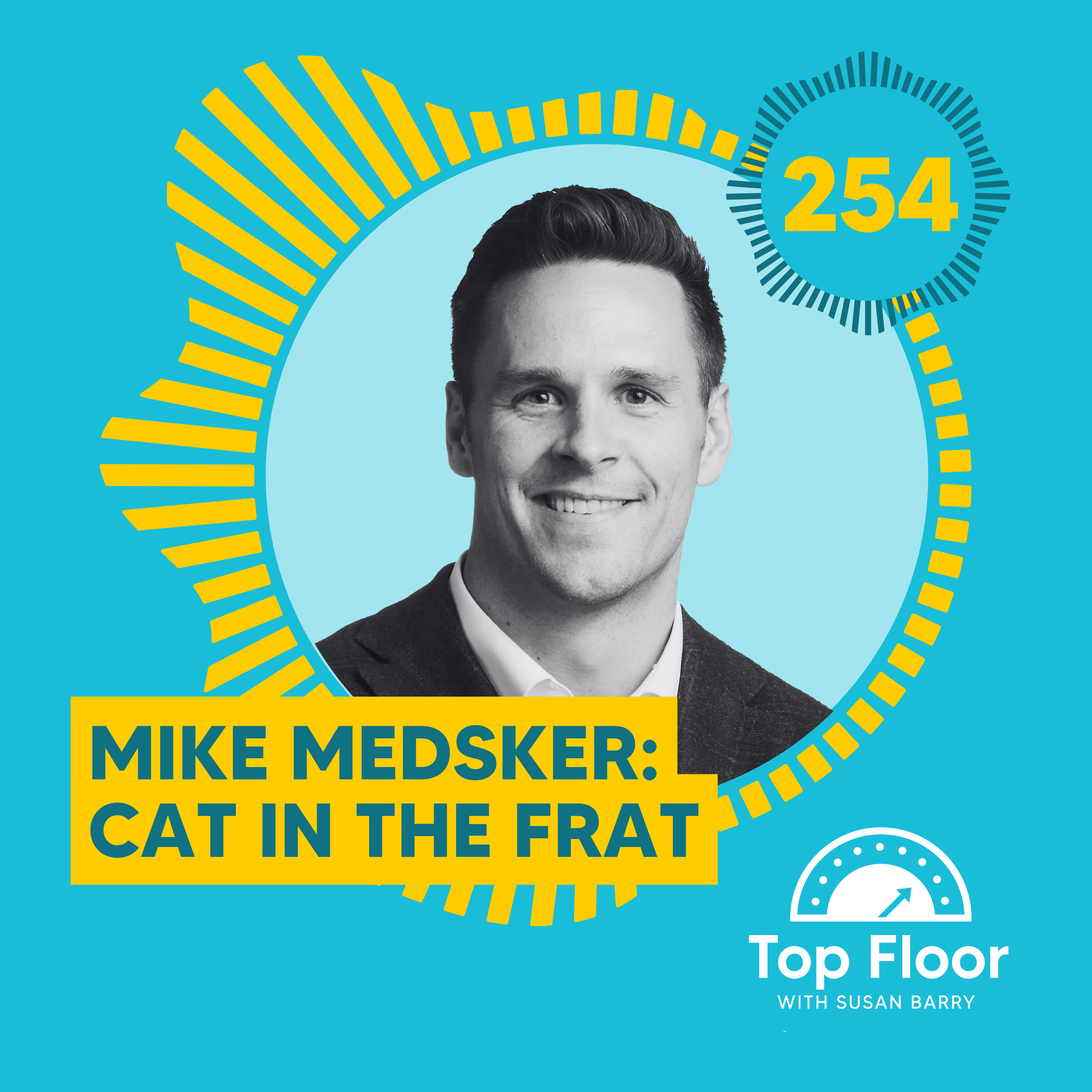
[00:00:32] Susan Barry: Welcome to the show. Mike Medsker cut his teeth in hospitality operations, starting as a sales intern at a 52-room boutique resort in Colorado's Vail Valley before rising through the revenue management ranks at Destination Hotels & Resorts and Two Roads Hospitality. Frustrated by the technology gaps he encountered along the way, Mike left to found his first company, a business intelligence platform for revenue managers, which he later sold and stayed on to help grow. After a few years as an employee and a brief detour living in Medellín, Colombia, Mike went back to what he loves most: building the next thing. He is now the founder of Siv, a company on a mission to fix one of the hotel industry's most maddening problems, the black hole that swallows sales leads before a planner ever hears back from a human. Today, we are going to talk about all things group sales, but before we jump in, we need to answer the call button.
Call button rings…
The emergency call button is our hotline for hospitality professionals who have burning questions. If you would like to submit a question, you can call or text me at 850-404-9630. Today's question was submitted by Greg. Greg asks, I love this question, "Do hotel salespeople really need to make outbound prospecting calls?" What do you think, Mike?
[00:02:17] Mike Medsker: That is a fantastic question, Susan, and certainly a hot topic. I think it depends on the property to some degree, right? I think that when you look across the industry today, we've done a pretty good job of building a healthy demand pipeline, but we oftentimes see conversion much lower than we would anticipate based on a review of hospitality against other industries, right? And so I think for properties that currently have a lot of lead flow coming at them but just aren't seeing conversion be where they would like it to be, I think that that would be the first area in which they should focus. But outbound is important, and I think where outbound really helps is that it keeps you from having to get lucky in terms of how much business is coming at you, right? And allows you to have a little more control over your own destiny. And so if we think about some of the major economic cycle disruptions that we've had over the last 20 years, right? Everything from COVID to going way back, the great financial crash in 2007, 2008. The most successful sales teams were the ones that knew how to put an outbound motion in place, and the reason why they were able to keep powering through is that they already had those muscles built. So by the time we started to see a little bit of economic disruption, they were ready to roll.
[00:03:35] Susan Barry: Ooh, that makes a lot of sense. That's a great answer, and I think you're absolutely right that it depends on the property. I also wonder if it's a question that can't be answered because we don't necessarily have good data. You know, who knows how many outbound calls it takes to fill a pipeline if the pipeline data is, like, super confusing, very mishmashed, and not even representative of all of the lead volume that's coming through.
[00:04:08] Mike Medsker: That, that's a great point, Susan. I mean, there's a huge amount of contextual loss that exists in hospitality sales today. Certainly something our team's helping to clean up. There are a lot of other teams that are working on this challenge as well.
[00:04:20] Susan Barry: Well, my first hotel job, which was also in Colorado, by the way, still very much influences the way that I think. Like, the things I learned on that job are sort of the definition of how I think hotel sales is supposed to work. Is there something from your very first job, that first internship, that still shapes how you work today, or have you thrown it all out?
[00:04:46] Mike Medsker: Definitely haven't thrown it all out. I think as you mentioned, I was working for a small resort up in the Vail Valley. It was a property that had once been a premium product, but it was in desperate need of a renovation, it was bleeding cash, and there was never enough time to get all the work done. And quite frankly, I was kinda thrown into an environment where it was trial by fire. Not because we didn't have good leaders, but just because everybody was spread so thin that the ability to sit down and take time bringing somebody like myself, at 20 years old, up to speed just wasn't there, right? And, and I think that we saw a lot of strong leaders come out of that environment, just because we had the opportunity to do so many different things early in our career. But it really would've helped us to be able to shorten the ramp period to bring on board new employees. And then the other thing is that when one person left, it was incredibly disruptive. And so the thing that's really stuck with me from that experience and that I always ask myself is, how do I help to build systems that compound organizational expertise over time so that way if somebody does leave a property and let's face it, hospitality turnover among sales teams is somewhere in the 30% range, right? That expertise is able to survive somebody potentially walking out the door, or if they get a promotion, they move onwards and upwards in their career, it doesn't become a limiting factor for the business.
[00:06:10] Susan Barry: That makes a lot of sense. So speaking of turnover and people walking away from hotels, what finally made you walk away from a big established hotel management company to start your first business?
[00:06:25] Mike Medsker: Yeah, I think probably other than being young and hungry enough to think, "How hard could it be?" which turns out it's really difficult. I was lucky to have the right mentors early in my career. So, Tyler Williams, who was the VP of revenue for us at Destination and Two Roads at the time, who's now with Atlantis. Tom Luersen, Andre Fournier, and Dana Karas of Coral Tree now. They exposed me to a lot, especially on the system side of the industry. And really, as we started to dive a little bit deeper into systems, we started to see how the intersection of people, process, and technology all contributed to either the success or failure of a hotel management group, right? And so what I kept noticing is that the difference between the properties that were performing really well and those that weren't. It wasn't that they had the smartest or the hardest-working people; it was actually that they had the systems that captured wisdom at every level, from the line level all the way up to ownership, and kept it when people moved on, right? And so the goal being that you lose one of your top performers to a promotion, the team's able to keep running. And we started to look at what tools were available for us in the marketplace and noticed that from a BI perspective, we didn't really find exactly what we were looking for, right? And so decided to leave Two Roads in order to build Focal. It was the first BI platform actually to put, like, revenue management meeting agendas in the product because we understood that the data is only as good as the decisions that you make from it. And so it gave me really an opportunity to take a lot of the experience that I had gained from working with such a great group of individuals early in my career and leverage that into an opportunity to help influence the way that the industry thinks about data.
[00:08:10] Susan Barry: You built and sold Focal before starting Siv. I wonder if there's anything that you're doing differently this time around that is a result of that experience.
[00:08:23] Mike Medsker: Quite a bit. So, with Focal, I knew how to build a quality product, but really nothing beyond that. So, somewhat optimistically thought that you build the best product, people will come, right? But I learned a lot about distribution. And also the value of being able to move quickly against a problem as opposed to spending two years in development before you ever take anything to market, right? When I joined my digital office, which is now Otelier, I had the opportunity to see how Ali Moloo and Sudhir Menon and Matt Curry built a real business and not just a product. And it kinda helped me to understand that it's okay to start with a niche product, prove that people will actually pay to have that pain point solved, right? And then expand based on how your early customers are using it. So rather than, I think people traditionally think of, like, Steve Jobs as the prototypical entrepreneur, right? There are very few Steve Jobs out there that can predict exactly where a market's headed over the next 20 years, right? The best way to build an organization is to get something out there, see how people are actually using it, and then to kind of iterate from there. And then I think the final piece is really kind of learned a lot about staying power, and so we were really close to breaking through commercially at the time I sold Focal. It made me think a lot about longevity this time around. So, I brought a co-founder over for Siv from Netflix, who is an amazing technologist and really passionate about the hospitality space and being able to apply his expertise to it. And we think there's 10 to 15 years of really good work in hospitality sales and marketing. And so for us, we wanna be around for the entire journey, and that shapes everything from capital strategy to how we build the product to building relationships that will stand the test of time.
[00:10:11] Susan Barry: That's interesting. So if I had to recap that, I would say, "Don't sell too early." I don't know if that's accurate or not.
[00:10:20] Mike Medsker: That's a good way to put it. It was a great outcome for where I was at the time I started Focal, but it would be a disappointment to sell at the same stage this time around.
[00:10:28] Susan Barry: Got it. Let's set the stage for our listeners. What is actually happening or perhaps not happening behind the scenes when an event planner, meeting planner sends a lead to a hotel right now? Pre-siv, if they don't have siv.
[00:10:47] Mike Medsker: Pre-siv. I appreciate that distinction. We've shopped over 200 hotels ourselves just to get a sense of exactly what you just asked, right? And what we see is that it's highly variable across chain scales, brands, management companies, and oftentimes even within the same group. Do you wanna hear the staggering part first?
[00:11:07] Susan Barry: Yes.
[00:11:08] Mike Medsker: So 29% of the time, nothing happens. So you submit a lead, and you never receive a response back from the hotel.
[00:11:16] Susan Barry: That's insane to me.
[00:11:19] Mike Medsker: But think about how much revenue that represents across the industry.
[00:11:23] Susan Barry: I mean, okay. I'm gonna put my director of sales and marketing hat on for one second and try to explain that away. So could it be that they're getting leads, and they know it's not a fit, so they don't respond? Or could it be technological glitches, or is it just people dropping the ball?
[00:11:42] Mike Medsker: When we dig in with teams that don't necessarily respond 100% of the time, we're seeing it's a combination of factors. A lot of times it really is a gap in the technology or the process workflow. And so, we always ask leaders when the last time was that they shopped their hotel, right? And I'm not talking about shop scores or shop calls that they're hiring a service to do. But actually going through and submitting a lead as if you were a planner, use your personal email or your wife's personal email, right? To make sure that they're not able to assess. Maybe not your wife, same last name, but a friend's personal email, so that way they can't figure out they're associated with you.
[00:12:20] Susan Barry: Or your many aliases, which when I was doing shops of hotels, I had many aliases.
[00:12:29] Mike Medsker: 100%. So yeah, put on your costume, do the shop, and just see what happens, right? And I think that if you're only doing that once every couple years, it's probably not enough, right? And so, generally, the 29% of the time when we see that people aren't responding reliably, it's just because they need to develop a better understanding of what happens within their process. And then beyond that, 29%, we see that about a quarter of the time people are responding within four hours. That's assuming that the lead comes in on a workday, which is about 70% of all leads, right?
[00:13:04] Susan Barry: Wait, what? I'm very surprised. That's almost more staggering to me that 30% are just, like, randomly sending leads on a Sunday morning.
[00:13:13] Mike Medsker: It was a surprise to us as well, and you would expect that that would be mostly SMERF or weddings business, right? That 30%. But we actually see it break down in corporate as well. So corporate, association, government business, still kind of 27-28% of the time those leads come in after hours. I think it's just indicative of everybody these days being asked to do more with less, and so people are trying to get caught up on things when they have a few hours where they're not in meetings, right? And so if you don't have a process that's equipped to respond to those when your team is sleeping, then you're probably going to have a lower conversation and conversion rate than you would like.
[00:13:53] Susan Barry: So you mentioned that a percentage are being responded to within four hours. What's the overall timeframe for that? Like, you know what I mean? I remember there used to be rules like, we respond in 24 hours, we respond in 8 business hours, all that stuff. How does it stack up against what's really happening?
[00:14:14] Mike Medsker: Yeah, we like to talk a lot about planner hours versus seller hours, and the two clocks are not the same. And so if you look at some of the measurement services out there today, they're basing everything on whether your team's in the office or out of the office, right? Planner doesn't care about that. If a planner submits a lead at 4:00 PM on Friday, and they don't hear back until Monday or Tuesday, that feels really bad for a planner. It feels like a really long time to wait. So a seller might look at their clock and say, " I responded in two to three working hours," but it's not getting the job done to ensure that you're able to harness that forward momentum that occurs when somebody submits a lead to your hotel.
[00:14:55] Susan Barry: What was the moment that made you realize that response speed rather than the sort of volume of incoming leads was the real problem in group sales?
[00:15:07] Mike Medsker: So my wife and I got married almost three years ago, and we're in a season of life where our whole friend group is getting married. There are a lot of late bloomers in the Metzger friend group. But what we experienced and what we've continued to hear from friends is that it's really hard to get a quality response from a hotel or a venue. So it's kind of a wild experience to be standing there with your wallet out, not an insignificant amount of money in it, and knowing that you're not sure if you're ever gonna hear back after submitting an RFP or what that next step might be, right? And so as we went through that experience, it kind of caused me to reflect on my own early career in hospitality sales, where I had no idea where to even start when a new lead came in, right? And I think that a little structure and that first response would've helped me out greatly. So, dug into the problem a little bit more with a lot of sales leaders that I really respect, and we started hearing things like sellers are only connecting with maybe 1 in 10 leads before they're actually sending out a proposal. And so figured that maybe something has to change if group sales is going to remain relevant. And it's really important that it does, right? Because as hoteliers, we're selling the value of in-person connection, and if we take the person out of that sales process, it kind of deletes the value of what we're trying to sell.
[00:16:23] Susan Barry: How many places did you try for your wedding?
[00:16:27] Mike Medsker: 40.
[00:16:27] Susan Barry: And how many responses did you get?
[00:16:29] Mike Medsker: My wife would probably give you the breakdown 'cause when I say we tried 40, she tried 39, I tried one.
[00:16:35] Susan Barry: Okay. Well done. Well done. Way to pitch in.
[00:16:37] Mike Medsker: But yeah. Really, really carrying my weight here. But I would say it kind of reflected a lot of what we're seeing more generally across the industry. So about a third didn't respond. We had a solid group, 25-30% that responded same day, and then there were others that maybe responded 48, 72 hours later, or we had to chase down, and then they responded the second time we reached out.
[00:17:00] Susan Barry: That is amazing. Well, how do you make sure that a faster response isn't just an automated response that feels like it's coming from a machine? So you talked about the importance of in-person connection. I think another big thing that we're selling in hospitality is the humanity of it all. So, faster response, absolutely, but we still need it to sound like it's from a human, right?
[00:17:28] Mike Medsker: Yeah. The simple answer is you ensure it still feels like it's coming from a person by not trying to do too much. And so there are a lot of companies right now that are selling AI sales agents that handle everything from qualification to booking, right? And to an owner, that sounds really promising, right? You get to offload the whole sales effort, skip the hiring and training part, where do I sign up, right?
[00:17:53] Susan Barry: Get rid of these expensive salespeople and their dry cleaning bills.
[00:17:57] Mike Medsker: Exactly. But we've seen this movie play out before, right? And so, if you look at what happened when the hospitality industry leaned maybe a little too aggressively into doing business through email and third-party platforms, and how that impacted long-term relationships, right? People saying, "We'll be the best bid on a grid," right? "And we're gonna get the right amount of sales volume through the sheer amount of leads that we're receiving" or, "We'll win everybody over with our magic proposals." And that's kinda how we got to the ghosting era as hospitality sales teams, right? But even if you look outside of our industry more recently, Klarna's CEO had famously said that AI was doing the work of 700 of their customer success agents, right? And they publicly walked that back several months later when they admitted that maybe they went a little bit too far. The quality suffered, customers hated it. It was not a good move. For us, like, the perfect response is dead simple. No more than three lines in a text message. Stop sending the seven-page email that a lot of teams are copy-and-pasting today when they're manually responding. And then, the goal should really be to do three things. So ask one smart question that uncovers needs beyond rate, dates, and space. Reference something that makes your hotel uniquely suited to that type of business, and then ask for a ten-to-fifteen-minute call to explore their objectives, more importantly, to share your ideas about what would work best for their particular group. So you don't wanna tell the planner everything in this first touch. And you certainly don't wanna quote before you know what matters to them. It's really important to just find out who's actually engaged instead of fishing, and to be able to take one small step forward with them together.
[00:19:41] Susan Barry: I love that. Don't try to do too much. Well, walk us through then what the sort of warm handoff looks like from the planner side. So you've done that, you've set up a call, real sales per- person steps into the conversation. What does that look like?
[00:20:00] Mike Medsker: So because the first response doesn't try to do too much, and because it comes from an actual seller rather than a general inbox or sales and catering administrator, there's no awkward handoff at all. Which is a lot different from a lot of times what happens in a manual selling environment today. And, quite frankly, with a lot of other tools that are out there, they can solve for the speed of a first response, but it still is coming from a general team inbox or has some third-party branding on it. One of our customers, Ashley Didone at Mountain Lodge, Telluride, actually just emailed me the other day, and she said that a planner auto-scheduled a meeting with her and opened their conversation by saying, "I've gotta tell you, Ashley, you're incredibly efficient." Ashley had actually never met her. She had never manually sent her a message, and we thought that was really amazing because that's the exact thesis we built Siv on, right? Is we jump in, get a quick handoff for your sellers, and then they step into a warm conversation where they can close the business.
[00:21:02] Susan Barry: I think I said this to you probably the first time we talked about Siv, and I'm sure that there are salespeople on the other end of their headphones right now going like, "Planners say they don't wanna be talked to. They say, 'Do not contact. Do not contact.'" What do you think is the biggest misconception that hotel sales teams have about how planners actually wanna be engaged?
[00:21:23] Mike Medsker: I think you just said it, Susan. The biggest limiting belief in hotel sales right now is that people say nobody wants to talk to anyone anymore, right? I get where it comes from. If you look at industry appointment rates today, they run eight to fourteen percent of leads on average. But hotels can really easily two to three times that with some simple changes to their initial outreach. And what we're seeing in our data is that customers are landing confirmed appointments with thirty to fifty percent of their prospects, and that even when they don't get that appointment, a planner will still tell you what they need next in order to keep things moving. So planners do wanna talk, they just wanna make sure that the time will be invested well.
[00:22:08] Susan Barry: We like to make sure that our listeners come away from each and every episode of Top Floor with a few practical, tangible tips to try, either in their businesses, their hotels, or maybe in their personal lives. If a sales manager could change just one thing about how they handle inbound leads tomorrow, regardless of the tech that they have access to, what would give them the fastest return?
[00:22:37] Mike Medsker: Good question. So I know you said regardless of technology, but everybody…
[00:22:41] Susan Barry: You can't just say, "Buy my thing." Come on, man.
[00:22:46] Mike Medsker: No, I was gonna say, everybody has a cellphone, right? So I'm gonna answer this through the lens of no new technology, right? I would say try adding text messaging in your sales process. Across our customer base, 47% of engaged planners are using text only, 21% are using both text and email, and 32% use email only. So without having to add any new systems, you could start today introducing text messaging into your process. And I think what you'll find is that it reliably will get you into conversations and help to get appointments set for you.
[00:23:24] Susan Barry: Oh, that's really interesting. I can imagine a world in which that feels a little risky because it's less trackable. Any thoughts on that? Or is it just, like, get over yourself, everyone texts, come on now, just take a screenshot and move on, lady.
[00:23:40] Mike Medsker: Yeah, it's a good point, right? I think the visibility layer has not existed up to this point, and it's resulted in a lot of context loss, because if you're texting with a planner, you're generally not going to load every single text into your sales and catering system to be able to pull that up down the line when you need to remember what you had discussed with that planner. But I think it starts by just saying, try text message. See how it goes for you. And then, with an agile mindset, you can expand on that over time, right? And if you find that you're starting to see some great results, there are a lot of ways to add that visibility layer. There are ways to ensure that text messaging becomes more predictable and also doesn't rely on you to provide everybody with your own personal cellphone. And then more importantly, there are ways to be able to ensure that if you introduce text into your process, you're not going to be woken up at 3:00 a.m. when your client in Paris is texting you at lunch, right?
[00:24:40] Susan Barry: That is good news to hear. Well, once the sort of manual step, the first touch busy work is off of the seller's plate, how should they spend that time instead? Texting? Just text a bunch of people.
[00:24:58] Mike Medsker: This is gonna surprise you based on, on my answer to the, the call-in question, but outbound prospecting. And so I think that in a manual environment, the sellers who prospect, oftentimes are worried today that being away from the desk means that those inbound leads that they worked so hard to cultivate might end up booking somewhere else just because nobody responded while they were out prospecting, right? But it's an artificial constraint, and I think that if you can solve the first touch, everything keeps moving forward for you until you can step in, right? And so that's for sellers. But then I think, Susan, probably one of the more dramatic changes that we see is that in the sales coordinator role, there's a fundamental reset that can occur because they're no longer staring at an inbox all day routing leads. And so the highest and best use of that role becomes possible, and they can start doing things like researching the market, pulling contact lists, preparing for conferences, all the logistics that are robbing sales managers of revenue-producing time today.
[00:26:02] Susan Barry: Ooh, I love that plan. Well, we have reached the fortune-telling portion of our show. So now you have to predict the future, and then I will text you and let you know if you got it right. What is a prediction you have about the future of hotel group sales?
[00:26:20] Mike Medsker: I think in five years most hospitality sales teams will have moved towards a clustered or a complex model where they're handling multiple hotels at once. We watched this play out in revenue management starting around 2020, and we're seeing a lot of the early indicators there now. And, just like that shift, I think what we'll find is that the most successful sellers are going to be the ones who learn how to cover more ground with the same 24 hours a day that everybody else has.
[00:26:47] Susan Barry: That cluster model, I worked for Starwood when they tried it, and I worked for Starwood before they tried it. But when Marriott was trying it, and we were trash-talking them up and down every one of those meeting planner streets because we're like, "We have a team here. You don't have to deal with the cluster." If you have any thoughts on this, what do you think has changed to make a cluster sales effort more effective now than it was when it was first tried by a few, I mean probably 20 years ago?
[00:27:25] Mike Medsker: That's a good question. There's a lot of new technology available that enables better process workflows, right? And so one of the main reasons that didn't work, let's say 15 years ago, was that even in a cluster model, each seller was having to manage every property individually, and so they really never got a yield on their time. And so ultimately that just resulted in sales teams being stretched thin, which meant that they weren't responding, they weren't providing effective service, a lot of bad things that came with that. In order to make that move, you actually have to equip your team with the right processes, the right workflows, the right technology in advance, so that way that transition can happen effectively and it doesn't result in sellers just dropping the ball.
[00:28:11] Susan Barry: Got it. Makes sense. Technology saves the day once again. Well, the answer may be the same, but if you could wave a magic wand and change one thing about how hotel sales teams are structured today, what would that be?
[00:28:28] Mike Medsker: The sales and catering role needs to become something that looks more like rev ops does in technology or other industries. It really doesn't make sense for an owner to pay somebody, let's say $50,000 to $70,000 fully loaded, to sit there and monitor an email inbox and distribute leads when a machine is always simply going to be better at that job. Now, the role is super important. It's a great way to build your sales bench. We just need to make sure that we're reassigning that role towards higher-leverage work.
[00:29:00] Susan Barry: When you say that, you're referring to sales coordinator roles or, like, sort of the admin assistant in the room that right now hotels have that person directing traffic, and they could be doing so much more.
[00:29:16] Mike Medsker: Correct. Yeah. They call them lead catchers, right? And I think that term has become synonymous with the position, but really, lead catching is more effectively handled by a machine, right? I think that the sales coordinator has a really strong skill set that they can leverage in order to help their sales team be more effective in their day-to-day role. So it's helping to coordinate and host on-property events, making sure that the right outbound prospecting lists are in place. There are a lot of things that aren't happening today because oftentimes that coordinator is just being asked to focus on distributing leads versus potentially higher-value tasks.
[00:29:57] Susan Barry: That makes sense. Okay, folks, before we tell Mike goodbye, we are going to head down to the loading dock where all of the best stories get told.
Elevator voice announces, “Going down.
[00:30:11] Susan Barry: Mike, what is a story you would only tell me on the loading dock?
[00:30:17] Mike Medsker: So, I think one of my biggest what-have-I-gotten-myself-into moments came right at the beginning of my career. So my GM was asking me to book fraternity formals to buy out the lodge during our off-season. And Susan, I'm not sure if you have any experience with fraternity formals, but they can go a little crazy.
[00:30:35] Susan Barry: Yes, yes, I do. And having to implement the policy of hiring off-duty police officers anytime you had one of those events. Yes, totally.
[00:30:46] Mike Medsker: And so we had that. But then, I was pretty young at the time. I was, like, 20, 21. I think a lot of my customers were probably older than I was. But my general manager figured that because I was voluntold to sell these groups, it made sense for me to stay at the property over the formal weekends to quickly address any issues that might arise. So there was one group that was particularly memorable. I think over the course of that weekend, I was offered cocaine as a tip for bringing bags to the room. I had a guy try to fight me because, unbeknownst to me, his date had told their friends about how she was gonna get my number. Yeah, we had to figure out how to clear the strong smoke smell from an entire lodge before my GM made it back to town on Monday morning. So, I've got an eight-month-old son now. We just read Cat in the Hat, where the kids are scrambling to clean everything up before mom comes home. It's a little bit like that.
[00:31:53] Susan Barry: Oh my gosh, I can only imagine. I think that having to spend a weekend or even a weekend night at a hotel with a piece of business that you booked is both the most terrible idea and the most wonderful idea that the hotel industry has ever had, only because it provides amazing fodder for great hospitality stories.
[00:32:23] Mike Medsker: 100%, Susan.
[00:32:24] Susan Barry: Mike Medsker, thank you so much for being here. I know that our listeners are now foaming at the mouth to implement a first touch with their meeting planners, and I really appreciate you riding with me to the Top Floor.
[00:32:40] Mike Medsker: Thanks, Susan.
[00:32:42] Susan Barry: Thank you. Thanks so much for listening. Thank you for listening. You can find the show notes at topfloorpodcast.com/episode/254. Jonathan Albano is our editor, producer, and all-around genius. He even wrote and performed our theme song with vocals by Cameron Albano. You can subscribe to Top Floor on Apple Podcasts, Spotify, or wherever you like to listen, and your rating or review will go a long way in helping us give you more of what you like.
[00:33:18] Narrator: Thanks for listening to the Top Floor podcast at www.topfloorpodcast.com. Have a hospitality marketing question? Reach us at 850-404-9630 to be featured in a future episode.