
LISTEN TO THE EPISODE:
APPLE PODCASTS | SPOTIFY | TOPFLOOR.COM
[00:00:00] Susan Barry: This is Top Floor episode 220. You can find the show notes at topfloorpodcast.com/episode/220.
[00:00:13] Narrator: Welcome to Top Floor with Susan Barry. This weekly podcast ride up to the top floor features tangible tips and excellent stories from the experts and characters who elevate hospitality. And now your host and elevator operator, Susan Barry.
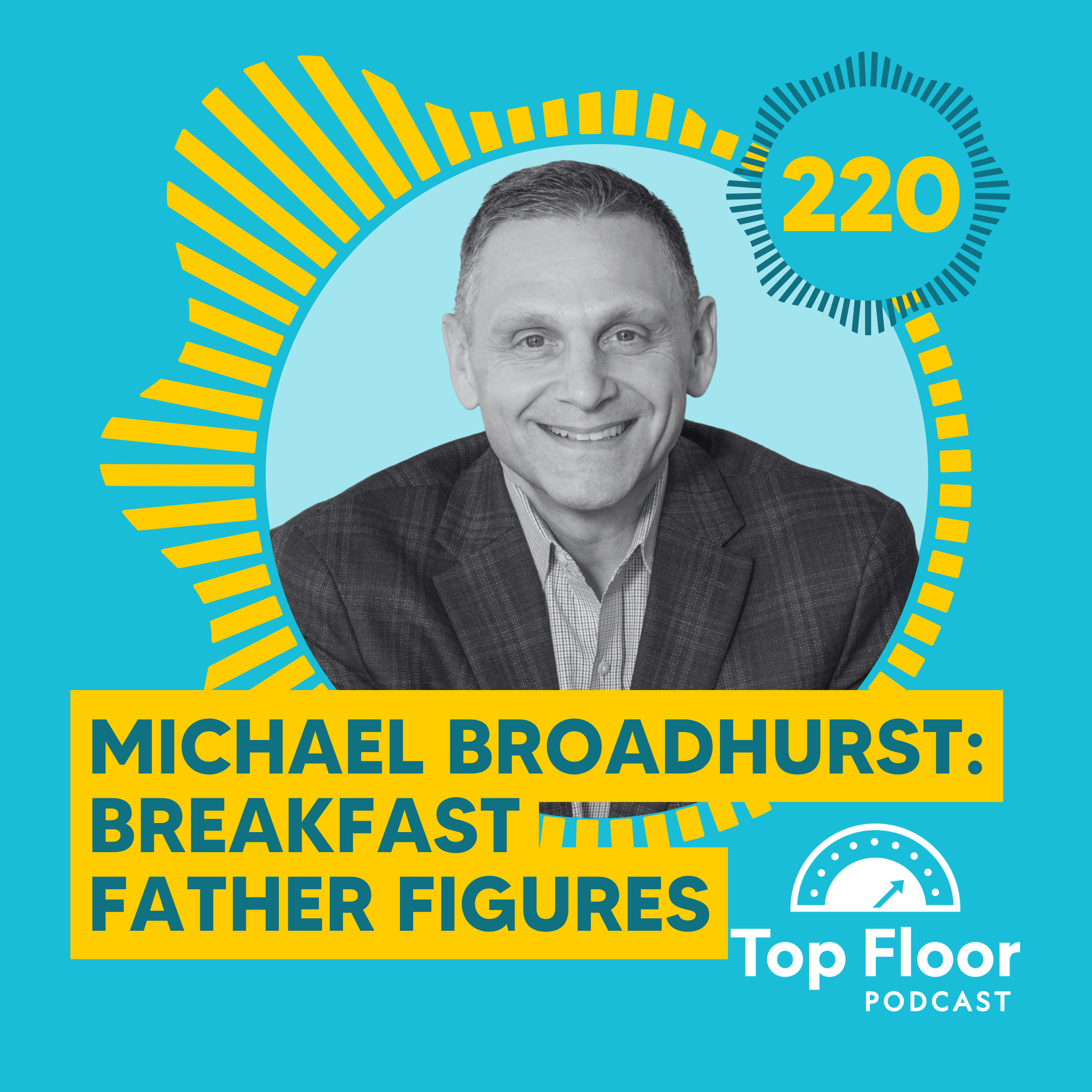
[00:00:32] Susan Barry: Welcome to the show. Michael Broadhurst grew up in small town New Jersey and found hospitality early washing dishes at 14 and bartending by 18. He raced up the food and beverage ladder, managed a high-volume nightclub and moved into hotel leadership with Marriott and Starwood. Eventually opening and operating the Westin Reston, and then later serving as general manager at the hotel that I opened in 2006, the Westin Arlington Gateway. After senior roles with Crestline and Crescent, culminating in Senior Vice President of operations, he joins StepStone Hospitality where he is Chief Operating Officer. Michael has helped turn around guest satisfaction through hands-on coaching and cross-discipline training. Today, we are going to talk about building high-performance hotel teams and probably a lot about the Western Arlington gateway. But before we get started, we need to answer the call button.
Call button rings…
The emergency call button is our hotline for hospitality professionals who have burning questions. If you would like to submit a question, you can call or text me at (850) 404-9630. Today's question was submitted by Casey, and Casey asks, what is the most important thing for a server to do to provide a great dining experience?
[00:02:08] Michael Broadhurst: Morning again, Susan. Thank you for having me on the program. I'm a huge supporter of you and a huge supporter of your show. So, thank you again. So now service is crucial nowadays and particularly in the environments where fast casual has taken over kind of our F&B landscape. The service has to be personalized. It has to be quick, and it has to be approachable, right? And I think a lot of dining establishments, whether they're mid-tier or even the higher end, are missing that. So, it's really all about that personalized service and that touch.
[00:02:43] Susan Barry: It's so true. I feel like there is such a feeling that you're getting ripped off now because everything is so expensive. And I don't mind that if it's a really special experience and I feel like it was worth it, the service is what makes it feel worth it to me, not the food. So speaking of food and beverage, what pulled you out of the bar and nightclub world where you started into hotel leadership when you were just a wee lad?
[00:03:03] Michael Broadhurst: Absolutely. Yeah. I started in F&B, and F&B was always my aspiration. I always wanted to be an F&B director. And as I started as a dishwasher and I wanted to become a chef, and then I had somebody talking me out of going to chef route. And I learned the front of the house, and I just loved it. I loved that kind of control chaos, so to speak. I worked in this hotel for a number of years where I had a boss and that said to me like, “Listen, Broadhurst, you're in the hotel business. You need to learn rooms and you need to learn the business. And, at that point, I only ever wanted to be an F&B director, right? I only wanted to just continue to work in that role. And at one point, I thought I wanted to become a general manager of a restaurant. I did that for a very short time and came back to the hotel very quickly. I realized that I just love the hotel environment. I love the interacting with the sales and marketing team and the accounting team and engineering and the rooms department. I just loved the multiple different departments and hotels, and restaurants didn't have that. And as I went to my first job as a general manager of a restaurant. First day in the job. I mean, I literally walked around the restaurant three times, and I said, “Oh my gosh. I really made a mistake.” I really thought that's what I wanted to do. And I remember calling a friend, I said, “Oh my God, where are the 300 rooms above my head? And it found out to be a very lonely job at the time too. And have all these other departments interact with.
[00:04:53] Susan Barry: That's a good point I hadn't thought about before, that you don't have peers if you're the boss of a restaurant. You're it.
[00:05:00] Michael Broadhurst: I was it. I was it. Of course, I had a boss, and he actually office outta my restaurant, which was great. But I really miss the interaction that I had with my support departments, right? I really love and I'm picturing in my mind right now, like the BEO meetings around this restaurant that we had in this one hotel. Then we would do the BEO meetings, and I was a bar manager, nightclub manager, and a lot of that didn't even translate to what I did every single week and weekend. All of our business came from the outside, but I love just the interaction, and I changed my schedule to come in on Saturday so I can help do play up, right? Help with the banquet manager, turn rooms, and like our shift on Saturday nights, our bartenders didn't come in until 8:30, 9 o'clock at night. But I would come in earlier because I wanted to learn the other side of that, and in a restaurant, you don't have that.
[00:05:53] Susan Barry: It's interesting that you had someone sort of push you to learn the room side. The exact same thing happened to me. I was an off-premise caterer and then a director of catering in a hotel, and my director of sales was like, “Look, you're never gonna do anything in this business if you don't learn rooms.” And I mean, imagine I was so intimidated. I'm like, “Buddy, I got bagels. What are you talking about?” But you have to learn rooms. So you definitely have said that that changed your trajectory, learning rooms changed your trajectory. What clicked when you went from the food and beverage side to like Rooms University at Starwood and then to the Director of Ops job?
[00:06:36] Michael Broadhurst: Yeah. Again, I was very fortunate to have a leader that really pushed and then sometimes he pulled, sometimes he pushed and pulled, and he absolutely took me outta my comfort zone. He took me out of managing the F&B which I always knew I was capable of doing, but he pushed me out of it. It was intense 40-hour training session in Atlanta, Georgia, and we had to Peachtree Plaza, and they put you through your ringer, then you either pass or fail. And it was an amazing experience because it exposed me to things I was never exposed to, right? And took me outta my comfort zone, and it put me in front of a room and not my peers at this point of all these other Starwood hotels, and put me in front of a room, and it allowed me to grow. My general manager at the time, Mark Forer. He exposed me to the owners at that point. And allowed me to sit in owners' meetings that I had never been exposed to that. I was a bar manager, right? I was a food and beverage director, and he started to teach me those components that I had never been exposed to before, and now I'm sitting in a room with a owner. We're a franchise, right? So it's a business now, and it was always a business before, but now it's a real business. We're a third-party manager, completely different from a brand-managed expectation. And I'm sitting in front of an owner and having to answer and guest satisfaction, having to talk about the problems, having to talk about GSS or GEI is what we called it back in the day, having to answer for why the QA failed. And I've said, absolutely not. We're gonna fix this. And it was through that I got the bug. I really got the bug. And eventually, at that point, I was tapped to come to Virginia and open up another hotel.
[00:08:23] Susan Barry: Okay. So we have to talk about that opening because our paths crossed. I don't even think knew it, but our paths crossed in a pretty funny way. So talk about that.
[00:08:32] Michael Broadhurst: No, so it's amazing. So, I was in New Jersey, so born and raised in New Jersey. I spent my life in New Jersey, and I got a call from Mark's boss, who's another gentleman, I'll give him a shout out to Sean Kirby. Sean was Mark's boss. Sean was Senior VP of Operations for Crestline and said, “Hey, listen, we're opening up a Westin Reston, Virginia, and would you be interested coming down as the hotel manager and get this thing open? And I'm like, absolutely, and I was born and raised in New Jersey. Time to move on. And I met with the general manager at the time, who was opening up the hotels. Hotel, I should say. And I was hired, I was employee number one of the Westin Reston, and I moved to Virginia, and at the end of 2007. And he opened up this Westin and talked about a completely different environment. Now is DC Metro, right? I'm coming from a small town, Princeton, New Jersey, to now DC Metro. In this super, super, super high-end community environment, working with a major DC developer opening up a phenomenal branded hotel. So, which is where the story gets funny that you and I will probably think it's funny. Nobody else will think it's funny. So, your hotel Westin Arlington Gateway opened in 2006, and my hotel opened in 2008. So I was hired in 2007, so right a year after your hotel opened. And a lot of similarities here, we had the same owner, right? And while you were brand manager, I was a franchise. I worked for Crestline, I worked for a franchise company, and we were always in the shadow of your hotel.
[00:10:28] Susan Barry: Oh no. How sad. I'm so sorry.
[00:10:32] Michael Broadhurst: No, no, no. But in a good way. So, I mean, you guys were the big, the best, the most prettiest hotel on the market. That market at the time was such an up-and-coming market in Arlington. It won all kind. You were best in class. You won every award. I mean everything, so hands down, right? So the owners were really, really, really proud of that hotel. So now the expectation is that we have to open a hotel just as good as that hotel. And again, my first real job, I'm gonna say real job. My first hotel opening, going down here. So the expectation was, listen, this hotel needs to be amazing. So I came down to Virginia, and the hotel wasn't even topped off yet. I was, again, employee number one. We had a Weston and a Sheraton right in the middle of each other. The general manager was a complex general manager. I reported to him, I ever saw the Weston, he was technically complex over both my office at the Weston, but since I completely drank the brand juice, I'm like my mind, like I'm going to make this the hottest lesson ever, right? I don't care if we're a franchise, I don't care if we're a non-branded hotel, like we are going to adhere to everything. It's gonna be the best hotel. Our guests will never know that we are a franchise.
[00:11:57] Susan Barry: Well, and for our listener, this was at a time when Starwood was just beginning to make the switch to asset light. Like it was going from primarily owned and managed assets to having outside owners and having third-party management companies. So at that time, there was a big difference between a brand hotel and a franchise hotel, at least within Starwood.
[00:12:23] Michael Broadhurst: Yeah. Thank you. That is a fantastic point. I appreciate you clarifying that for the listeners 'cause you're right, they really was. I used to joke, we would sit in the back of the rooms when we'd go to start those conferences at the time, and there was a clear delineation between franchise partners and the branded partners. And but again, my expectation to the team and to the property. I'm like, nobody's ever gonna know the difference. The guests will never ever know the difference. So it was an amazing experience. I remember my first day, and again, wearing a suit in a construction zone, it was really great. I walked into the construction meeting for my very first time with the general manager at the time, and we walked into this construction trailer. I thought an owner's meeting that I would deal with in New Jersey was high-pressure. I walked into this construction meeting with a bunch of construction guys and general contractor, and the owner, and they start asking questions and talk about intimidating, right? You're sitting on card tables and this construction trailer with guys with hard hats on, and I'm sitting there wearing a suit, and they're asking you questions, and it was crazy intimidating, right? But again, so we opened amazing. And something about that hotel that you don't know is like, well, you do know now, but I would go to Arlington. I would sit in the lobby and I would watch the service interaction. I remember we had the botanical with the botanicals. I think I end up using your same florist, right? I wanted to emulate everything that you guys did in Arlington, out in Reston. And again, these hotels are only 20 miles apart, and at the time, there was three Westins opening up. There's also another one opened up near the Dulles Airport at the same exact time. And because I was always in the shadow and the same ownership, ownership was so proud of Arlington Gateway. I made it my mission in life to open up the best hotel ever. At that point,
[00:14:24] Susan Barry: You stomp us into the ground.
[00:14:26] Michael Broadhurst: Oh, I stomp something into the ground. But I loved Arlington Gateway. As the story goes, it still holds a very special place in my heart.
[00:14:37] Susan Barry: Yeah. So you ended up going there as general manager. What do you think was special about that hotel?
[00:14:44] Michael Broadhurst: It's such an amazing story. I sit back now, and I just actually got chill thinking about it because I knew it, right? I knew it from having looked at it, having knowing about it from the ownership perspective, having sat in the lobby numerous times, and then going there 10 years later, essentially a little bit less than 10 years later. So that hotel went franchise, it went to Crescent at the time, and I worked for Crescent. And it was not the best of transitions, and everybody was so proud of that at that hotel was Starwood, and ownership was extremely involved and it needed to get through this cycle, right. And needed, and it's an investment, right? I mean, it's an investment. I mean, it was figuring out what the plan was.
[00:15:37] Susan Barry: When it transitioned, was it because they sold it or they just decided to take a franchise?
[00:15:44] Michael Broadhurst: No. So they actually sold it, and then they bought it back. So, they bought and sold it twice, actually. So they developed it, sold it, and then bought it back. And then somewhere along those lines, I don't remember the exact timeline. We, at Crescent, eventually came in to become the manager of that hotel. And because it is same ownership group at this point, I'm on Crescent, I'm managing another hotel, and out, Hyatt at the time, and same clients that I've known forever, they said, “Hey, can you go down to Arlington Gateway?” And I was like, “Oh my God. Absolutely. I love this hotel.” An institutionally great hotel and a phenomenal market. I mean, just beautiful, beautiful, beautiful hotel. But. It was a completely different environment at that point. Completely different.
[00:15:48] Susan Barry: Oh, I didn't know that. That's crazy. So what did you fix first when you got there?
[00:16:37] Michael Broadhurst: It really came down to putting culture back in place. And that's something that I stand on now, that's so incredibly important to me. And the only way to drive results and the only way to do anything is to ensure that you have the right players in the right place and that there is a culture, right? And it really comes down to the base. It absolutely the basics of our industry, and it goes back to the Marriott fundamentals of take care of your associates and your associates will take care of your guests. I believe in that. I always have believed in that. I've been an associate, I believe in everybody has feelings and everybody has wants and needs, and if you don't take care of your people, then they're gonna go elsewhere. And that's something that got lost in that transition. And because the team was so involved with Starwood, and Starwood is such a great company. It was a kind of a rocky transition and I went back in and we built a phenomenal executive team around me. I was just a cog in the wheel there. It's everybody else that really did all the work. It was just we built a really phenomenal team, and we were very supportive of our associates, and we did everything to drive really the guest experience there.
[00:17:54] Susan Barry: It's interesting. We talked about the shift from brand-owned and managed to now, I don't know, I can't even name a hotel that's owned and managed by a brand. So now someone in your position is not just an operator, but you're also, in a sense, a development person, right? Because you've gotta help get these deals done. What I'm curious about is, you and I both worked for the same owner and they were a wonderful owner. And then I have also had the opposite experience with owners before. How do you decide which deals to walk away from? Do you ever walk away from them? Like, how can you tell that you're gonna get an owner like you and I both had vs. the bad guys?
[00:18:45] Michael Broadhurst: No, that's a phenomenal question. And listen, we walk away from a lot of deals, and for several reasons. One is like, we ultimately need to know that we believe in this story, right? And we ultimately need to know that we can make an impact. And there's a lot of operators out there, third-party operators. There's a lot of folks that will simply put numbers on paper, and that's fine. And if that's what they want to continue to do and to get the business, that's fine. But there's certain things that we're not going to do. We're not gonna overpromise, underdeliver. We need to know that we're gonna make an impact. And I mean that like, our relationship, we don't wanna turn and burn. We wanna be in that relationship for several years. And if we can see it, particularly if it's an investment where we wanna see it through its investment cycle. And what we're finding now is a lot of our new business coming in is through management change because the owner is not happy with the current operator. So we're coming in because the deal market is basically dried up, right? So we're taking advantage of that, where they're not happy. And listen, there's certain things that we're not gonna come off of, right? I mean, integrity and all that. We do, it's part of our core values, right? We have four of them that are really great, but there's a couple that stand out for us when it comes to deals. It's like we're always gonna do the right thing, right? We're never gonna put numbers on paper just to make a deal work. Again, we need to know that we need to make an impact and integrity. We're not going to turn the blind eye to whether it's capital issues, life safety issues, anything that's potentially illegal, we're not gonna do anything like that. Creative accounting, we're absolutely not, right? There's certain things that we're not gonna bend on.
[00:20:36] Susan Barry: Do you think that the management company churn that we're seeing now, obviously, the transactions are real soft, right? So when we're seeing these management company changes like from taking a giant step back. Do you think it's because the contracts are too, I can't think of the word. I'm trying to too soft, like too easy to wriggle out of, and people are just desperate. Do you know what I mean?
[00:21:08] Michael Broadhurst: I absolutely know what you mean. And, listen, that's kind of the way of the world, and we truly believe that we are working for a paycheck every single week. And we are operating in that mindset. We're only as good as our last P&L or our last STAR report and that's our expectation from our teams is we have to perform. And yes, there's some management contracts out there in the industry that are really, really, really loose that allow this change. Unfortunately, it's probably some of it has moved into where the manager is more a commodity nowadays, and we're not looking for that type of business. We're looking for long-term relationships and we have agreements that are somewhat form-based and there's certain things that we're not gonna bend on. And that's okay. And that's okay. Listen, there is a client-owner relationship or client management relationship out there for everybody, right? And here's a set of clients that we wanna do business with, and here's our term that we wanna do business with. And if you wanna do business with them, that's great. And if you choose to go with us, we're gonna crush it, right? And we're going to meet your expectations, and we're going to exceed it because we're in this together. And the strategy, there has to be an alignment in that strategy. If there's any type of contention off the bat or if we're fighting them on any type of number, it's not gonna make sense. We're partners here. If we feel anywhere along the lines that we are not a partner in this with a client, it's not gonna work. It's not.
[00:22:47] Susan Barry: We like to make sure that our listeners come away from every episode of Top Floor with a couple of really practical and tangible tips to try either in their hotels, their businesses, their lives. What are a couple of critical things in your playbook for taking over a newly transition assets? So you've just gotten the management agreement. What are a couple things you do that are the most important?
[00:23:12] Michael Broadhurst: First off, it's stabilizing the teams. We get an agreement and we have a interaction or we have a kickoff call with the outgoing manager. And first and foremost, we're all in this together. So it's about respecting that outgoing manager. 9 out of 10, we know somebody on that team, we're friends with everybody.
[00:23:38] Susan Barry: And they probably worked with you a couple of years ago.
[00:23:40] Michael Broadhurst: They could probably somewhere along the line or they're gonna work with us eventually down the road. I can honestly count on my hand out of even maybe hundreds of transitions I've done throughout my career that it's gotten ugly and there's no time for that. We're a people business. We're all in this together. That management company is most likely gonna get another business with. Anyway, so the most important thing is once we have that kickoff call, we get on property immediately. And we have a meeting with the associates and I call it the commercial. We do a StepStone commercial and it's usually myself, it's whether Blair Wills, our president and CEO, it's the regional team. It’s everybody involved and we go to the hotel, and we just say, “This is who we are.” And we give them as much information as we know as possible to be completely transparent and say, “Okay, hang on. Nobody had to worry about their job. We don't have a bus parked out back that's all of a sudden gonna come here, right?” If there's going to be changes, whatever the changes are when it comes to benefits or paid time off or whatever, we're going to address it. That way they hear it from us instead of the rumor mill. And we talk about that right up front. And we're very, very, very transparent. And we do that, we do that immediately. And I say immediately, we have a 30-day window of transition, we're in there, week one, think, hang on a minute. This is who we are. This is our portfolio. This is my background. It's Blair's background. But I've been in their shoe before on a property. My first hotel went from brand manage to a franchise. I sat in that very same room and was scared to death of and lose my job. I know what it feels like. The housekeeper and the cooks and the folks that are working two jobs, they need that way more than we do, right? So I need to put their mind at ease and say, “You're gonna have benefits. You're going to have your paycheck. If the dates might be different, you're gonna have your paycheck, your date, your rate of pay is not gonna change,” right? We get all that out front, and that is the most critical piece to stabilize the team.
[00:25:52] Susan Barry: So, Michael, you're a longtime ops person. I am obviously a longtime sales and marketing person, and yet we're getting along here in this conversation, but I'm curious. Now that you are COO, if you have a sort of different perspective on sales and marketing, or have a point of view on it. So what do you want directors of sales and marketing to be doing differently in prospecting and account management that you think will drive higher quality, better revenue?
[00:26:24] Michael Broadhurst: First off, it's all about revenue. It's all about top line. I mean, we cannot survive without the revenue, right? So, we have to focus on driving revenue on all costs. I can't even stress that, the importance of that. And something that from being an operator is, I need to know, or our sales team needs to know that they can rely on the ops team, so part of it is removing any barriers, any type of silos internally, so we did that here, right? We at StepStone, we flat in the organization where the sales team reports in to me, our VPs of sales report in to me, the ops team report to me. It was a different structure. Previously where it allows everybody to have an equal seat, right? And I know that even on property, you have the general manager and director of sales, there is that reporting line. Still, we like to say that they're both essentially equals, right? And obviously the general manager, the general manager, but still, it all come down to driving revenues and the sales leaders need to know that, whatever they're selling, that the ops team can support that. And from our perspective, we have to be bold, you have to look for alternative ways to get new business. And again, a lot of sales leaders out there that still will manage based on feeling or even we're seeing that from hotels that we're transitioning, that the revenue strategy or rate strategy is based on feeling and not necessarily data. And that's something that we've really, we've really spent a lot of time with teaching our sales leaders to utilize the data. Utilize the BI tools that are out there, right? When it comes to prospecting new business, to not just looking at traditional sources of business, but looking at total account, like, what is that total account there, right? You have to talk to your top accounts, you have to speak to them on a regular basis, right? And understand what their goals and wants are, and that could be changing all the time, but if you don't know what their needs are, how are we to align? And something that's very important for us and for me personally. And again, we're not their supplier, we're their partner. And they need to know that we're their partner and we will do what we can do to make sure that we're in this together.
[00:28:56] Susan Barry: Awesome. We have reached the fortune-telling portion of our show, so you have to predict the future, and then I will come back and see if you got it right. What is a prediction you have specifically about the future of full-service hotels? And I ask that because you and I are both longtime full-service people, it doesn't seem like new ones are getting really getting built anymore.
[00:29:18] Michael Broadhurst: No, I mean, full-service hotels, the days of our father's Buick are long gone. It's now all about the experiential service component, particularly on the full-service side. And how can you know? Guests and even our associates create that service, right? And making it more of a destination vs. just a simple hotel. And again, I'm gonna use like our father's Buick, right? It’s gotta fit and this is where I thought Starwood was brilliant years ago about that like the travel or trip persona can change throughout their stay. And I truly believe that because you can check in on a Monday or Tuesday, and then your family might come on a weekend or you're gonna stay and do a destination. How can you activate your hotels to have to hit all these different levels of experiential service, right? Having amazing F&B. The days of a three meal restaurant that you're gonna get everybody for breakfast. No. You have to have a destination restaurant when you can. And I understand that's not gonna be the case for every single hotel in every single market. There has to be a really good F&B product. How can you activate live entertainment? Whether must have a top-notch state-of-the-art fitness center. These are all things that the full-service hotels are moving into and that space is getting much more competitive. And again, the days of the traditional hotel room once they are gone, but it's all about the experiential service for sure.
[00:30:59] Susan Barry: If you could wave a magic wand and change one thing about owner operator relationships, operator brand relationships, so in other words, the relationships between these hotel companies, what would you change?
[00:31:15] Michael Broadhurst: It comes down to there's a misalignment of priorities between all three. And we ultimately have a priority to our ownership group and the drive ROI as best as we can, right? And everything that we do must have an ROI, an ROI impact, right? A return on investment impact. We're not gonna just put anything at the hotel if it doesn't make any sense for us. And I talk out of kind of both sides of my mouth here, too, because we need the brands. We also wanna be the best brand partner out there. And we believe in managing brand-compliant, brand-standard hotels to the best of our ability. And I understand that brands have their priorities, which are obviously the guest satisfaction, their priorities are the brand integrity. They're driving their loyalty metrics and it's a little different when it comes from ownership perspective, which ownership is about profitability, cash flow, having to pay debt service, and there's a misalignment between the two of those and the landscaping has gotten much more competitive. The brands have really amped up their accountability on us as the third-party operator, where we are now held accountable for renovations when we don't control renovations. Yeah. Renovation cycles and we are put on the non-compliant list if a hotel is not on a renovation cycle, and again, we don't control that.
[00:32:39] Susan Barry: Really interesting. That doesn't seem fair.
[00:32:55] Michael Broadhurst: Yeah. Yeah. And that’s where there's a misalignment. Right. And for us it's important that when we talk about the clients that we are attracting or the clients that we're doing business with, that they understand that component. And again, listen, it's a business, it's an investment, but there needs to be a reinvestment back into the property. And owners need to understand that and set aside whether it's a reserve fund or have it built into their underwriting model, a renovation plan, or a recapitalization plan when it comes to that. Unfortunately, there's some owners out there that don't believe in that, and we are held accountable to drive guest satisfaction. You can only do so much in guest satisfaction side. But in the product, we continue when the product continues to diminish.
[00:33:45] Susan Barry: That’s a hundred percent true. Okay, folks, before we tell Michael goodbye, we are going to head down to the loading dock where all of the best stories get told.
Elevator voice announces, “Going down.”
[00:34:00] Susan Barry: Michael, what is a story you would only tell on the loading dock?
[00:34:05] Michael Broadhurst: So, I rack my brain on this for a while and of course, being in the industry for as long as I have, and we have a lot of juicy stories, and I'm not gonna tell a juicy story, I'm gonna tell kind. No, no, no, no, no, no. And a lot of those is like you're sworn to secrecy in a lot of that. But no, particularly in after spending five years in the nightclub side of it, I can honestly tell you, I've probably seen it all.
[00:34:18] Susan Barry: Oh, no. Oh my gosh.
[00:34:31] Michael Broadhurst: You can only imagine. No, but this is more of a feel-good. So as I mentioned, I grew up in New Jersey. I spent five years at a hotel. Early in my career, and then ended up going back there again as the F&B director, then eventually director of operations, and so on and so forth. So I was in New Jersey last year, and I was touring a market and I was in the market and I was touring hotels and just out and about. And I went to that hotel, or I went to a hotel, right? And I walked into this hotel and I saw my three breakfast servers that I knew from 25 years ago and it was great. They came over to me. We hugged each other, and I've known these guys again, 20, 25, probably even more than now, 25, 27 years. And we're obviously much older and I've known their kids, now that I have grandkids, and it was just this amazing experience. And they brought people off from the kitchen that I knew and again, like they don't know me, they don't know what I do. And I just said, I'm in the market and touring around. They don't know, obviously know what they knew, but I'm just touring around and it was so great to sit there and talk to those guys that I've known. I grew up with them, and it's like some of them looking at them now, they're like father figures or grandfather figures. It was really nice. I have a picture of all of us together, standing in line. It was really nice. It was really nice to be able to see those guys.
[00:35:15] Susan Barry: Are you serious? Oh, that's, that's so cool. Michael Broadhurst, thank you so much for being here. I know our listeners got some great insights and suggestions and I really appreciate you riding with us to the top floor.
[00:36:22] Michael Broadhurst: Susan, thank you so much for your time. This has been wonderful. I really appreciate it.
[00:36:27] Susan Barry: Thank you for listening. You can find the show notes at topfloorpodcast.com/episode/220. Jonathan Albano is our editor, producer, and all-around genius. He even wrote and performed our theme song with vocals by Cameron Albano. You can subscribe to Top Floor on Apple Podcasts, Spotify, or wherever you like to listen, and your rating or review will go a long way in helping us give you more of what you like.
[00:37:03]Narrator: Thanks for listening to the Top Floor podcast at www.topfloorpodcast.com. Have a hospitality marketing question? Reach us at 850-404-9630 to be featured in a future episode.